


Redundant routing system is configured with multiple routes and backup systems to ensure traffic of the network is maintained even when the main routes or devices are faulty. In contrast to single-path systems that can easily suffer outages, redundancy makes high availability with automatic rerouting of data around issues which can happen such as highways with parallel roads that act as backup systems during jamming. This redundancy reduces downtime which is a big factor to businesses, hospitals and internet backbones where seconds cost thousands.
Multiple Paths for Failover
Different physical and logical paths begin with redundancy. Alternatives are dual ISP links, independent fiber cables, or mesh topologies, with the result in the event of cutting of construction by Link A, traffic moves over to Link B in a transparent manner. Such protocols as OSPF or BGP recompute optimal paths in a few seconds, based on link-state databases to map the network and bypass failed nodes. It did not require any human intervention; convergence would occur within 50ms on well-tuned systems.
Duplicate Hardware: Routers and Switches

Hot-swappable routers are VRRP or HSRP routers that combine devices with virtual IPs. Traffic is done by master router, backups by heartbeat packets. Master fails? Backup is self-promoting, and it inherits the IP without dropping the session. Unified control planes Switches with stacking or MLAG allow one control plane to fail, and the stack will still operate. Cascading brownouts are prevented through power redundancy through dual PSUs and UPS.
Load Balancing and Traffic Distribution
Redundancy is not those idle backups, active-active modes divide load between paths. ECMP (Equal-Cost Multi-Path) hashes streams over equivalent bandwidth links to maximise throughput and ensure immediate failover. Anycast IPs direct to closest server cluster; one fails, directs the query to the world. This avoids bottlenecks which guarantees 99.99% uptime.
Protocol-Driven Resilience
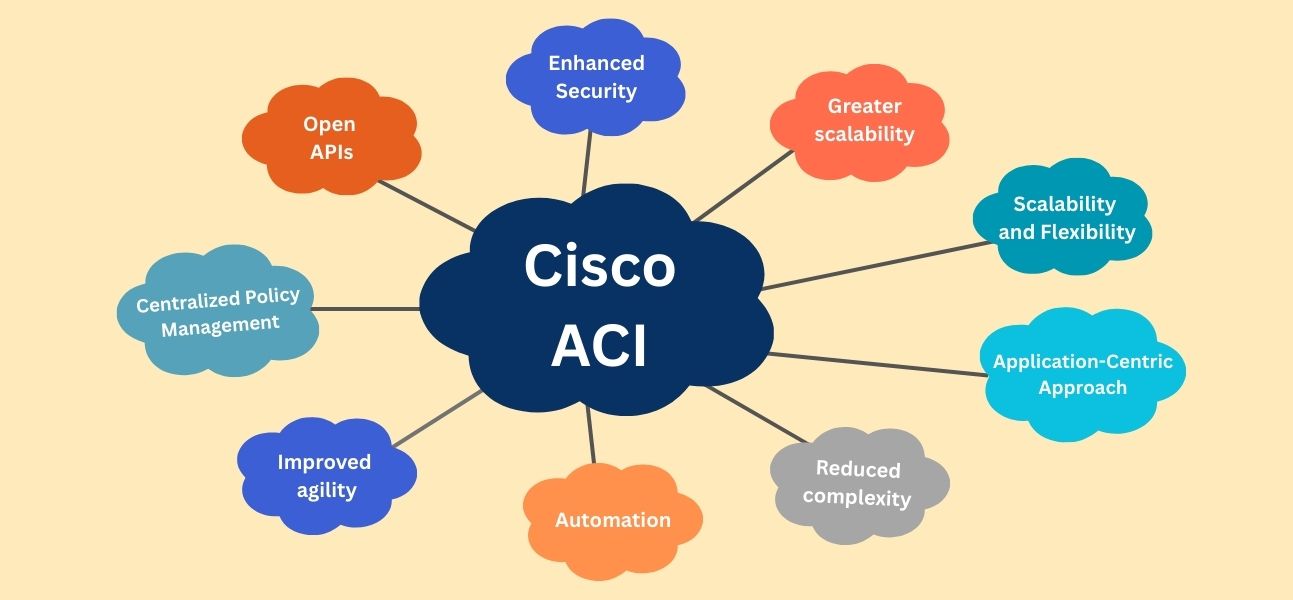
Dynamic protocols are bright: OSPF broadcasts topology information to speed up recovery; BGP peers share paths between autonomous systems, which is resistant to peer flaps. Simple paths are easy to use and do not require flexibility: failure requires intelligence. SDN controllers such as Cisco ACI are used in centralization of policy, programming flows across fabrics to heal within seconds.
Monitoring and Testing Redundancy
Downsizing does not work without verification. Visimimetic traffic tests fail; software such as ThousandEyes mimics failure. Logs are recorded of convergence times; alerts are activated on asymmetric paths. Frequent exercises, pull cables, kill power, reveal weak points. Capacity planning eliminates redundant but saturated traps.
Challenges and Best Practices
Loops are born of complexity – STP eliminates broadcast storms in LANs. Hardware costs twice as much; excess resources waste money. Balance 1+1 or N +1 models: The critical links are fully mirrored, the less important ones are partially mirrored. Separate conduits (different geography) beats backups that are colocated.

Real-World Impact
AWS is supported by redundant routing, financial exchange, 911 centers, outages millions per hour. The backbone of Internet BGP mesh manages failure daily transparently. Design yours: Plot single points, add paths/protocols, test brutally.
Downsizing transforms weakness into strength. Test your network now- audit it- create working backups.